




 Displacement
 Max Torque
 Riding Range
 Ground Clearance
 Fuel Tank CapacityKerb Weight
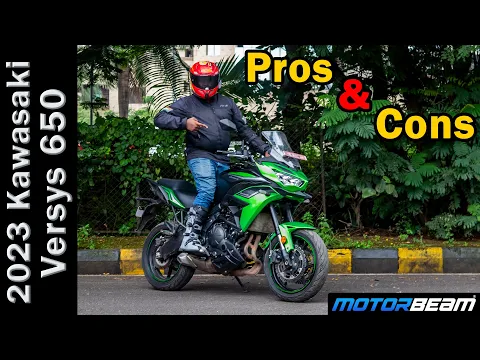
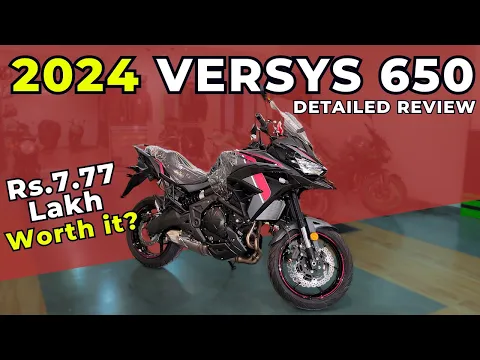
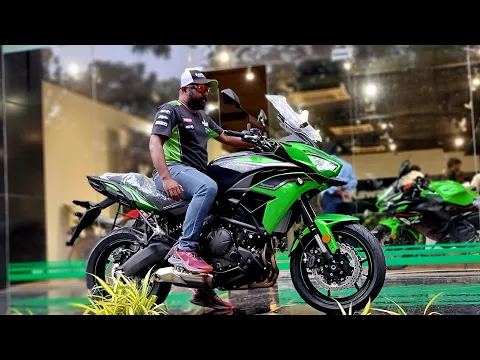
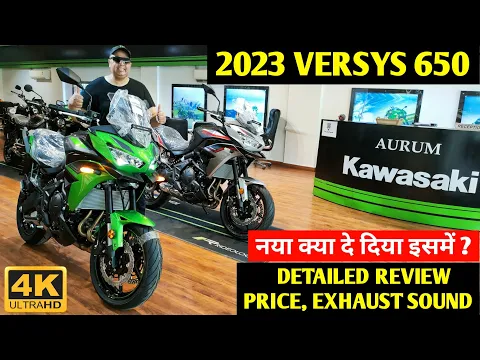
The Kawasaki Versys 650 is a versatile adventure-touring motorcycle designed for riders who want comfort, performance, and practicality. Launched in India in May 2025, the latest iteration of this globally successful model features a 649 cc parallel-twin engine, upright ergonomics, and modern electronics. With adjustable long-travel suspension, ample wind protection, and a user-friendly power delivery, the Versys 650 competes with bikes like the Suzuki V‑Strom 650 and Triumph Tiger Sport 660 in the mid-capacity adventure segment.
Kawasaki has launched the 2025 Versys 650 in India at an ex-showroom price of ₹7.93 lakh. It’s offered in a single Metallic Matte Graphenesteel Gray colour with a redesigned adjustable windshield and Bluetooth-enabled 4.3″ TFT instrument cluster. The motorcycle costs ₹10.20 lakh (on-road) in Bengaluru, while it costs ₹10.25 lakh and ₹9.06 lakh in Mumbai and Delhi, respectively.
The on-road price, which varies between locations, comprises insurance cost, registration fee, and handling charges. Due to regional taxation differences, the on-road cost in cities vary. For example, the prices are much higher in cities like Mumbai and Bengaluru in comparison to Delhi.
While not focused on fuel efficiency, the Versys 650 delivers a fairly decent fuel economy for a motorcycle of its category. Claimed mileage is 19 kmpl, and real-world figures range around 16.5-17 kmpl . Riders in highway conditions often see 18-19 kmpl, depending on riding style. With its 21‑litre fuel tank, a single full tank offers about 400 km of riding between fuel stops.
The Versys 650 features a 649 cc liquid-cooled parallel-twin engine outputting 67 PS at 8,500 rpm and 61 Nm at 7,000 rpm, paired with a 6-speed gearbox and slipper clutch It includes dual-channel ABS, traction control, LED lighting, and an upright riding position. The suspension comprises 41 mm inverted forks and a laydown rear shock, both preload and rebound adjustable. Weighing approximately 218 kg, with a seat height of 840 mm and ground clearance of 170 mm, it balances agility with comfort
| Specification | Details |
| Engine | 649 cc parallel-twin, liquid-cooled |
| Power | 67 PS @ 8,500 rpm |
| Torque | 61 Nm @ 7,000 rpm |
| Top Speed | ~199–200 km/h |
| Mileage | ~19 kmpl (claimed) |
| Fuel Tank Capacity | 21 litres |
| Transmission | 6-speed with slipper clutch |
| Weight | 218 kg (kerb) |
| Seat Height | 840 mm |
| Suspension (Front) | 41 mm USD fork, rebound adjust |
| Suspension (Rear) | Laydown shock, preload adjust |
| Brakes | 300 mm dual front, 250 mm rear, ABS |
| Pros | Cons |
| Comfortable upright ergonomics and adjustable windscreen | Heavy at 218 kg; not as nimble in tight city traffic |
| Long-travel suspension with fine adjustability | Seat height of 840 mm may be tall for shorter riders |
| Versatile engine with usable mid-range torque | Lacks off-road gears or spoked wheels for heavy touring |
| Modern electronics: TFT display, ABS, traction control | No quick-shifter |
| Higher price compared to some rivals |
The bike offers impressive mileage, making it ideal for both daily commutes and long rides. Its efficient engine ensures optimal fuel consumption, providing a balance between performance and economy. Exact mileage may vary based on riding conditions, maintenance, and usage habits, ensuring every rider gets the best experience.
This bike prioritizes safety with features like advanced braking systems (e.g., ABS), durable tires for better grip, and efficient suspension for stable rides. Additionally, the powerful LED headlights enhance visibility in low-light conditions, ensuring a safe and secure journey on various terrains and in diverse weather conditions.
Yes, the bike is designed for comfort and performance, making it suitable for long-distance travel. Its ergonomic seating, powerful engine, and efficient suspension reduce fatigue during extended rides, while the large fuel tank ensures fewer stops. Riders can enjoy a smooth and enjoyable journey over varied terrains.