





 Displacement
 Max Torque
 Riding Range
 Ground Clearance
 Fuel Tank CapacityKerb Weight
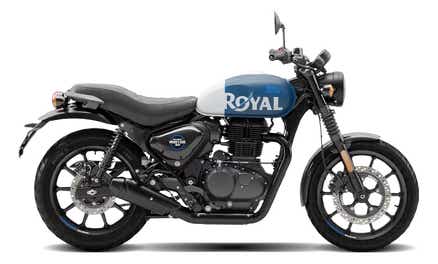
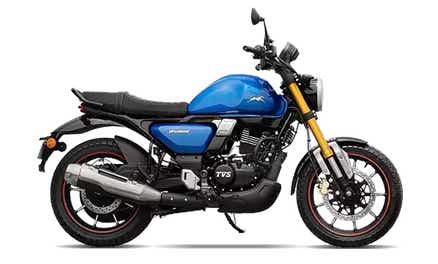
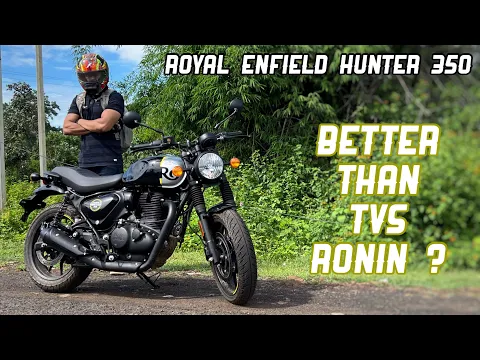
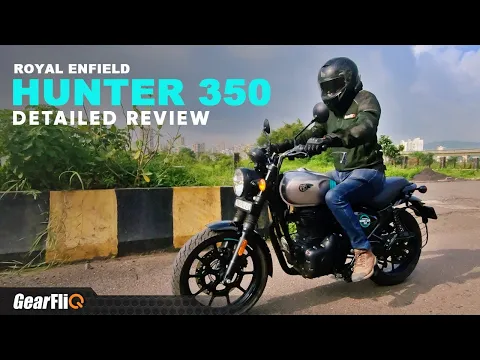
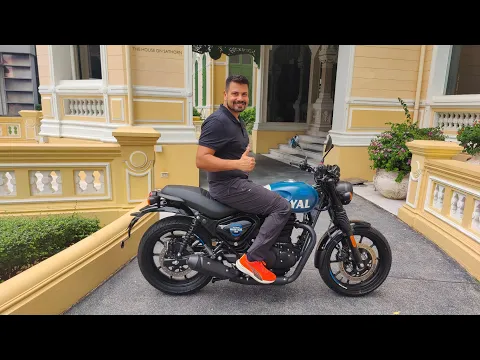
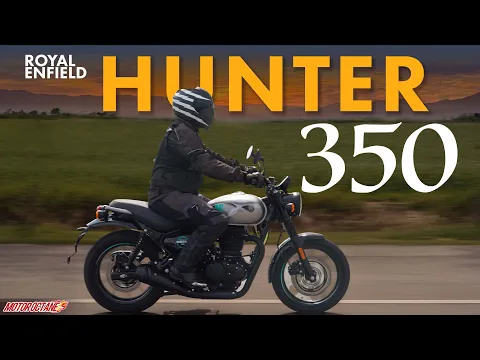
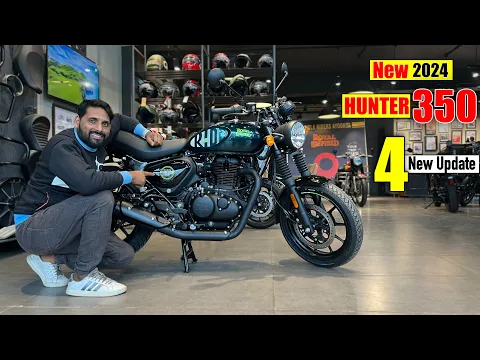
The Royal Enfield Hunter 350 draws from classic roadster and light scrambler design without going overboard with retro styling. The round LED headlamp, blacked-out engine cases, and flat seat give it a clean, modern-retro look. Wire-spoke 17-inch wheels on both ends complete the traditional silhouette. There are no unnecessary body panels or decorative chrome. The design is restrained, and it works well.
The ergonomics are set up for the city's handling and convenience. The handlebars are wide and upright. The footpegs are in a neutral position. The seat height is low at 790 mm, making the bike accessible to a wide range of riders. First-time RE owners frequently comment on how natural the riding position feels right from the start.
Royal Enfield sells this bike in 10 colour options. Highlights include Rebel Red, Factory White, and Dapper Grey. The newer Dapper O in orange and Dapper G in green have been popular additions. The Dapper S variant gets dual-tone paint schemes that look especially sharp on city roads. Panel quality and paint finish are consistently good across the range.
The Hunter bike punches above its weight in terms of street presence. It draws attention without trying too hard, which is a balance very few bikes at this price manage well. Some owners point to ordinary switchgear quality as a weak spot, and that is a fair observation. But the overall package is cohesive and well thought out.
| Feature | Detail |
|---|---|
| Headlamp | LED |
| Instrument Cluster | Semi-digital, analogue, and LCD |
| Wheel Type | Wire Spoke |
| Wheel Size | 17-inch front and rear |
| Available Colours | 10 |
| Available Variants | 4 |
The J-series 349.34 cc single-cylinder engine in this RE is air- and oil-cooled. It produces 20.2 bhp at 6100 rpm and 27 Nm of torque at 4000 rpm. Royal Enfield tuned it for smooth city performance rather than peak output. The engine character is relaxed, linear, and easy to work with in traffic.
The 5-speed gearbox shifts smoothly, and the clutch is light. The assist and slipper clutch is a genuine standout feature at this price point. It prevents rear-wheel hop during sharp downshifts and brings a level of refinement that is uncommon at this price. The bike meets BS6 Phase 2B emission standards.
The sweet spot in everyday riding is between 60 and 80 kmph. The engine feels settled and willing in that range. It will cruise at 100 kmph without trouble, but feels more relaxed below that mark. Forum communities and long-term owners consistently rate the engine among the most satisfying in the segment. It has a pleasant thump at medium revs that gives the riding experience real character.
The engine does warm up in slow traffic, as expected from an air-cooled single. Leaving small gaps in traffic and avoiding prolonged idling helps keep temperatures comfortable. Overall, the J-series engine is among the most accessible and enjoyable in this price bracket. It rewards smooth riding and delivers consistent performance over long ownership.
| Specification | Value |
|---|---|
| Displacement | 349.34 cc |
| Max Power | 20.2 bhp at 6100 rpm |
| Max Torque | 27 Nm at 4000 rpm |
| Transmission | 5-speed manual |
| Clutch | Assist and slipper |
| Top Speed | 114 kmph |
| Emission | BS6 Phase 2B |
Ride quality is a genuine strength of this Royal Enfield. The upright riding position reduces fatigue on daily commutes. The 790 mm seat height is approachable, and the seat itself is well-cushioned for rides up to an hour.
Front suspension uses telescopic forks that absorb city road imperfections well. The rear twin shock absorbers do the job, though they can feel stiff over sharp speed breakers. Many owners increase rear preload by one notch and report a noticeably smoother ride. It is a simple adjustment that makes a real difference.
Pillion comfort is adequate for city use. The rear seat is wide enough and reasonably padded. On longer rides, the pillion feels bumps more than the rider does. For daily commuting with a pillion, it is perfectly fine.
At 181 kg, this is the lightest Royal Enfield available. That weight advantage matters in real traffic. The bike is easy to flick through gaps, handles tight turns with ease, and makes U-turns less dramatic than heavier alternatives. Dual-channel ABS comes standard on all variants and delivers predictable, progressive braking.
Compared to other 350cc bikes, the handling here feels notably more planted and precise. Riders coming from scooters or smaller bikes often describe the Hunter as the most approachable 350cc bike they have ridden. That accessibility is a deliberate engineering choice, and it shows.
| Specification | Value |
|---|---|
| Front Suspension | Telescopic forks |
| Rear Suspension | Twin shock absorbers |
| Front Brake | Disc |
| Rear Brake | Drum or Disc by variant |
| ABS | Dual-channel standard |
| Kerb Weight | 181 kg |
| Seat Height | 790 mm |
| Ground Clearance | 160 mm |
ARAI-certified mileage is 36.2 kmpl. Real-world results from owner communities consistently range between 32 and 35 kmpl in mixed-use settings. That is a solid figure for a 349cc engine. The J-series motor is more fuel-efficient than the older UCE engines Royal Enfield used before it.
City riding in heavy traffic pulls figures down to around 28-30 kmpl. Highway riding at 70 to 90 kmph pushes the number up to around 37 to 38 kmpl. Tyre pressure is one of the most influential factors. Riders who maintain correct pressures report 2 to 3 kmpl better fuel economy than those who do not.
The 13-litre fuel tank gives a practical range of around 380-420 km per fill-up. Monthly fuel costs for 500 km of riding work out to around Rs. 1400 to Rs. 1600 at current petrol prices. Royal Enfield provides four free services. Paid service intervals are scheduled every 5000 km, and costs are competitive for the segment.
The instrument cluster displays a low-fuel warning. The Tripper navigation pod is available as an accessory for turn-by-turn navigation. Overall running costs is the lowest among the 350cc class.
Long-term owners also note that the J-series engine requires minimal fuss between services. Consumables like brake pads, air filters, and chain kits last a reasonable number of kilometres. Royal Enfield's wide service network makes finding a workshop easy, even in smaller cities. Spares are readily available and competitively priced compared to most rivals.
Hunter 350 price starts at around Rs. 1.38 lakh ex-showroom. The top-spec Dapper S comes in at around Rs. 1.70 lakh. Four variants cover different needs and budgets.
| Variant | Approx. Ex-showroom Price |
|---|---|
| Standard | Rs. 1.38 lakh |
| Dapper | Rs. 1.48 lakh |
| Rebel | Rs. 1.55 lakh |
| Dapper S | Rs. 1.70 lakh |
The Standard has a drum rear brake and basic colour options. The Dapper and Rebel add rear disc brakes and more colour options. The Dapper S gets dual-tone paint and the best hardware package.
Features standard across all variants:
The on-road price of the Hunter 350 varies by state due to registration fees, road tax, and insurance. Always get a full on-road quote from your nearest dealer before buying. The Royal Enfield Hunter offers a lower price point than the Honda CB350 and Jawa 42 Bobber. That makes it the most accessible choice in this class for value-conscious buyers.
The Hunter also benefits from Royal Enfield's strong dealership network and ready availability of parts across the country. For first-time Royal Enfield buyers, this model is the most accessible entry point. It carries RE brand character and J-series quality without the higher price of the Classic 350 or Meteor 350. Resale value has been strong, which adds to its appeal as a daily-use motorcycle that holds its worth over time.
This bike's price starts at Rs. 1.38 lakh ex-showroom for the Standard variant. The Dapper S is around Rs. 1.70 lakh. On-road prices vary by state. Ask your Royal Enfield dealer for a full on-road quote
ARAI mileage is 36.2 kmpl. Most owners get 32-35 kmpl in mixed use. City traffic drops it to around 28-30 kmpl. Highway riding at moderate speeds takes it close to 38 kmpl. Correct tyre pressure helps significantly.
The Hunter bike is built for city use but handles short highway stints well. It is comfortable up to 100 kmph. For occasional weekend trips under 200 km, it works fine. For regular long-distance highway use, a heavier Royal Enfield model suits better.
Both share the J-series 349cc engine. The Royal Enfield Hunter is lighter and more city-friendly. The Classic 350 suits highways better and has a more traditional look. The Hunter is priced lower and easier to handle in traffic, making it better for daily urban commutes.
It is available in 10 colours. Options include Factory White, Rebel Red, Dapper Grey, Dapper O (orange), and Dapper G (green). Dual-tone schemes are available on the Dapper S variant. Colour availability depends on the variant chosen.
Yes. Dual-channel ABS is standard on all variants. It works on the front wheel and provides predictable, progressive braking. Higher variants also add a rear disc brake, which improves overall stopping performance over the drum unit on the Standard.