
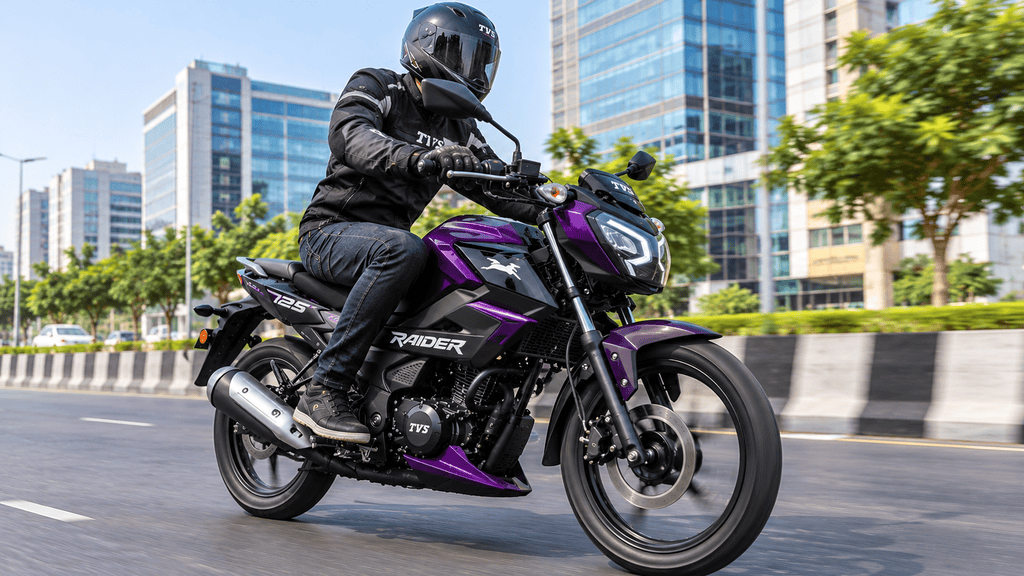
TVS Raider 125 mileage: city and highway factors

Key highlights
- TVS Raider 125 has a claimed mileage of 56.7 kmpl.
- Real-world mileage ranges from 50–57 kmpl in the city.
- Highway mileage can reach 58–65 kmpl with steady riding
Outline
Ask ten Raider owners about mileage, and you will get ten different figures, and most of them will be truthful. The TVS Raider 125 Mileage varies by a few kmpl depending on whether the motorcycle spends its time stuck at traffic signals or running on open roads. This guide will compare both scenarios and explain the difference in terms of engineering and the changes that can be made. All information is up to date as of November 2026.
The TVS Raider 125 has an ARAI-claimed 56.7 kmpl. Riders commonly report about 50 to 57 kmpl in the city and about 58 to 65 kmpl on the highway, so a mixed-use average near 55 kmpl is a safe figure to plan around. Heavy traffic, Power mode and speeds above 80 kmph pull it lower.
What is the Real-World Mileage of TVS Raider 125?
The TVS Raider 125 average that riders quote sits in the mid-fifties, with a wide spread between the worst city day and the best highway run. That spread is the whole story of this bike’s fuel use. The Raider runs on a 124.8cc, air- and oil-cooled, three-valve, fuel-injected engine making 11.2 bhp at 7500 rpm and 11.2 Nm at 6000 rpm, with a sporty tune that rewards the throttle. The full TVS Raider 125 specifications are worth a look before you read on. Below, we take the claimed, city, and highway numbers one at a time.
Real-World vs Claimed Mileage
The ARAI-certified mileage of the Raider 125 is 56.7 kmpl under certain conditions such as being tested on a chassis dynamometer, with zero wind resistance, zero gradient, no pillion, and a constant speed profile. With a 10-litre fuel tank capacity, the claim translates to around 567 km per refill.
TVS Raider 125 City Mileage
The most common mileage figures in cities are around 50 to 57 kmpl. The TFT model has shown a mileage figure of 57.14 kmpl in the city. Owners have found lower mileage figures than this, and some even quote figures in the 40s due to the stop-and-go condition of traffic.
TVS Raider 125 Highway Mileage
On the highway, riders commonly report 58 to 65 kmpl, and the same road test logged 61.98 kmpl. TVS Raider mileage on highway stretches stays strongest at a steady 55 to 65 kmph in the upper gears. A few published tests and owners go further, into the high 60s and even the early 70s, and one test put its city figure above its highway figure.
Factors That Affect TVS Raider 125 Mileage
Behind every kmpl number sits the same chain of causes. TVS Raider fuel efficiency comes down to how much petrol the engine burns to beat four things, namely rolling resistance, air drag, weight and its own internal friction, plus whatever is thrown away as heat in braking. TVS Raider mileage per litre is just distance divided by fuel burnt, so anything that makes the engine work harder shows up in the figure.
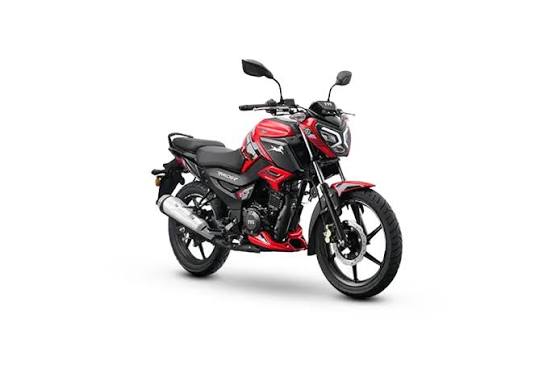
However, tyre pressure remains the unassuming one. A soft tyre flexes and pulls more, and that extra pull consumes fuel. At 123 kg kerb weight, the Raider is lightweight, which gives it a boost, but a passenger or a full saddlebag negates that lightweight quality on every acceleration. A dry chain wastes fuel, and a choked air filter strains the engine for its breathing requirements. Fuel is important too. E20 petrol, which is the new blend available at Indian petrol pumps, has lower energy content than petrol and causes a drop in mileage.
However, official claims estimate that the difference is in the range of 1 to 6% based on how well the engine has been tuned for it. Eco mode limits throttle response to save fuel, and Power mode sacrifices economy for performance.
Also Read: TVS Raider 125 vs Honda SP 125
Riding Style and Throttle Inputs
Throttle is a fuel tap. A sharp twist of the grip commands a rich burst of injected fuel, and a rider who accelerates hard and brakes late burns noticeably more than a smooth one. Early upshifts, a light wrist and a steady speed keep the engine at part load, where it is most efficient. Speed matters as well, a point the next section picks up.
Traffic Conditions and Frequent Braking
Braking turns the bike’s kinetic energy into heat, and the engine then pays again to rebuild that speed. Stop-go traffic repeats this dozens of times a trip, and idling at signals burns petrol while covering no distance at all. Some Raider variants carry idle stop-start, which shuts the engine off at a standstill and trims that penalty. A longer gap to the vehicle ahead lets you roll rather than brake.
City vs Highway: Why Does Mileage Differ?
Generally, highway gives higher mileage than city driving and is about 5 kmpl cheaper based on road test results and customer feedback. The main reason why there's a difference between TVS Raider city and highway mileage is steadiness, not the type of road.
In the city, a lot of the fuel is used to accelerate the 123 kg of weight of the bike and rider to almost zero over and over again and then dissipate the kinetic energy via the brakes. There's idling with fuel consumption without moving. Low gear requires a lot of engine revolutions for each kilometre, and each of them has a friction cost.
While driving on the highway, the bike maintains one speed in high gear. The only thing to pay attention to is air drag that increases proportionally to the square of the speed. If you double the speed, the force of drag quadruples, whereas overcoming the drag becomes 8 times harder.
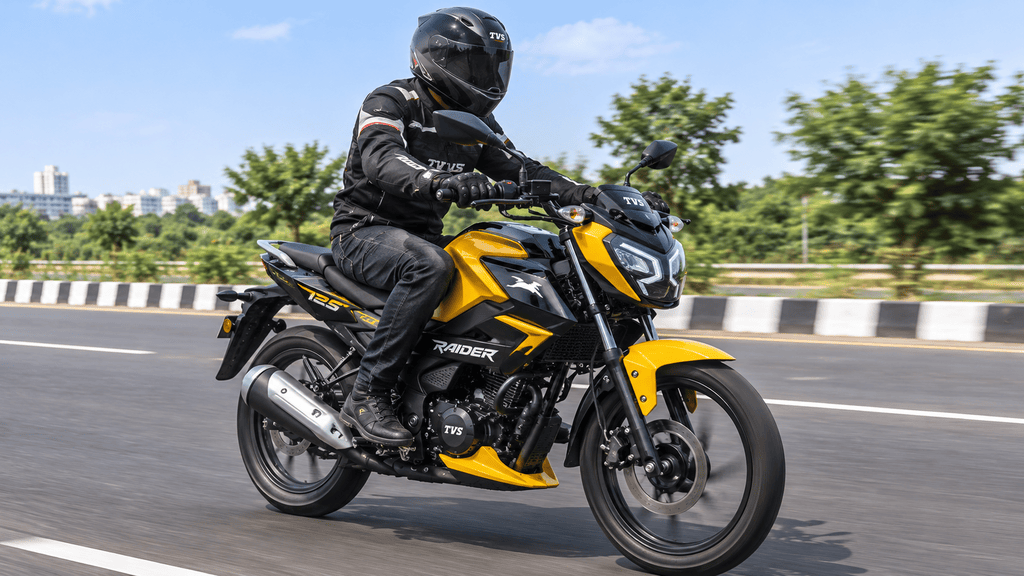
That is the reason that the highway efficiency does have a limit. Until 65 kmph, Raider is usually cheaper in terms of cost per km. After 80 kmph, drag will eat into the advantage, and a rider maintaining the Power mode close to 99 kmph will find the efficiency figure moving closer to the city figure.
| Riding condition | Approx. speed (kmph) | Commonly reported mileage (kmpl) | Petrol used per 100 km (litres) |
| Official ARAI figure | Lab test | 56.7 | 1.76 |
| City, mixed traffic | 20 to 45 | 50 to 57 | 1.75 to 2.0 |
| City, heavy stop-and-go | Below 25 | 40 to 50 | 2.0 to 2.5 |
| Highway, steady cruise | 55 to 65 | 58 to 65 | 1.54 to 1.72 |
| Highway, flat out in Power mode | 80 and above | Drops below cruise figures | Rises |
Interpret the numbers in the chart as ranges, not guarantees. The lower limit of the heavy stop-and-go category is based on a few owner experiences. Observe the final column for TVS Raider 125 petrol usage in the currency unit that affects your pocket. Considering a representative rate of ₹100 per litre, a 1000 km ride at 50 kmpl will consume 20 litres at a cost of ₹2000, whereas the same distance covered at 60 kmpl will consume about 16.7 litres and cost ₹1667. This is a difference of around ₹333 per 1000 kilometres, and this is why a long highway drive is more economical than a short drive in the city. Variants with riding modes and stop-start narrow the gap, so check the TVS Raider 125 variants and prices before you pick one.
How to Improve TVS Raider 125 Mileage
None of this needs special equipment. Ranked roughly by how much each habit moves the needle, this is what is worth doing.
- Ride smoothly: Open the throttle gradually, shift up early and avoid holding the engine near its rev limit.
- Hold highway speed in the 55 to 65 kmph band where traffic and the law allow.
- Set tyre pressure to the figure in the owner’s manual and check it cold, with a gauge, at least once a month.
- Keep the chain clean, lubricated and correctly adjusted, and service the bike on schedule so old oil and a dirty filter are not costing you fuel.
- Use Eco mode in town on variants that have it, and switch the engine off at long signals where it is safe and legal.
- Travel light, and skip the pillion if you can.
Mileage Myths Worth Dropping
Coasting in neutral does not save fuel. The engine keeps burning petrol at idle, while many fuel-injected engines cut or sharply trim the supply on a closed throttle in gear. Neutral also takes away engine braking and control, which is a poor trade on a downhill.
Long warm-ups are another habit to retire. A fuel-injected engine warms up faster under light load than it does standing still, so idling for minutes only burns petrol for zero distance. Ride off gently instead. And do not mistake the highest gear for the thriftiest one. Lugging the engine in top gear at low speed strains it and wastes fuel, so pick the gear in which the bike pulls cleanly.
To see whether any of this works, use the full-tank method. Fill to the brim, ride, refill to the brim, then divide the kilometres by the litres added. One tank tells you little. Three in a row tell you the truth.
The Number to Plan Your Budget Around
Plan on 55 kmpl for mixed use, treat 50 as the honest city figure and 60 as a fair highway one. If your daily ride is a short, stop-and-go office run, TVS Raider 125 mileage will sit near the lower end, and a variant with Eco mode and stop-start is worth the extra money. If most of your kilometres are open road, expect the upper end. The Raider is a good daily commuter either way, since the 10-litre tank gives a range of roughly 500 to 600 km. Some rival 125cc commuters claim higher figures on paper, so if every kmpl decides your purchase, compare the Raider with its rivals before you book.