




 Displacement
 Mileage - ARAI
 Kerb Weight
 Fuel Tank CapacityBraking System
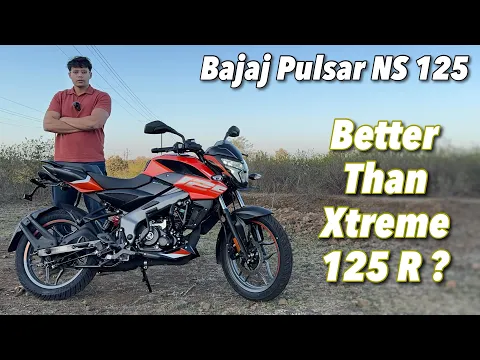
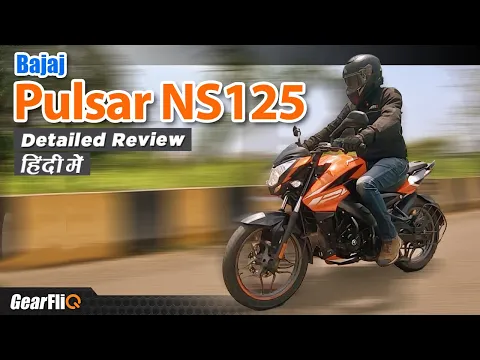
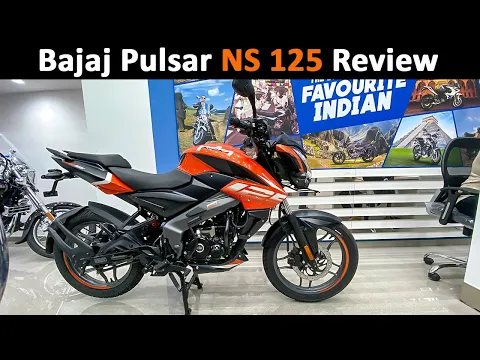
The Pulsar NS 125 was designed to be visually indistinguishable from its larger siblings at a glance. The muscular tank, split seat, sharp LED tail lamp, and belly pan are direct cues from the NS200 and NS160. Riders who want the streetfighter look without the larger NS's weight have no better option at this price.
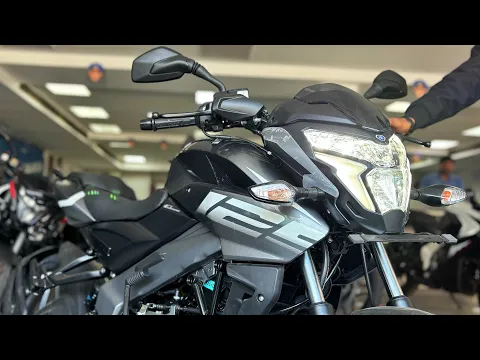
The wolf-eye LED headlamp is the face of the NS family. The base Standard variant still uses a traditional Halogen bulb headlamp setup. Only the newly updated Bluetooth variants feature the upgraded LED headlamp assembly. It provides strong forward illumination and a distinctive daytime appearance. The perimeter frame is partially visible through body cutouts, adding visual depth that most 125cc bikes don’t offer. The split tail lamp and muscular tail section complete the streetfighter silhouette.
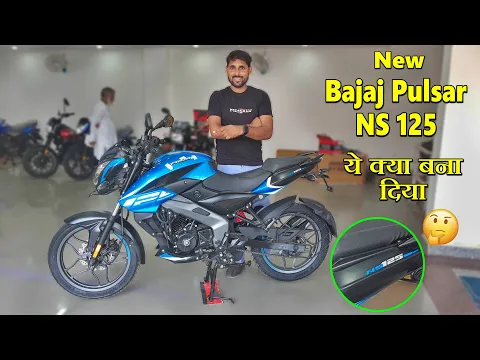
Five colour options cover a practical range. Fiery Orange and Beach Blue are the most distinctive. Black, Burnt Red, and Pearl Metallic White offer more conservative and neutral choices. All five colours are available across all three variants.
The February 2025 update brought the full digital console from the NS200. On BT and BT ABS variants, it shows navigation and connects via Bluetooth for alerts and trip data. Turn-by-turn navigation is a feature genuinely unusual at this price point. Build quality is solid for the class. Panel fit and finish are consistent with Bajaj's well-established standards across the Pulsar range.
| Feature | Detail |
|---|---|
| Headlamp | Halogen/LED |
| Frame | Perimeter frame |
| Front Suspension | 31mm Telescopic front forks |
| Instrument Cluster | Digital (BT variants with navigation) |
| Bluetooth | BT and BT ABS variants |
| Available Variants | 3 |
| Available Colours | 5 |
Inside the Bajaj Pulsar NS125 sits a 124.45cc air-cooled single-cylinder DTS-i Ei engine. It produces 11.8 bhp at 8,500 rpm and 11 Nm at 7,000 rpm. A 5-speed gearbox handles transmission. These are competitive numbers for the 125cc class and place the NS125 among the top performers in terms of power.
The engine character is sporty by 125cc standards. Peak power arrives at 8,500 rpm. This encourages the rider to work through the gears rather than relying on low-end pull. Mid-range response is strong from 5,000 rpm upward. Below that, the engine is smooth but less eager. City riding at lower revs is relaxed, and the fuel injection ensures clean delivery in all conditions.
NS 125 mileage under ARAI testing is 46 kmpl. Owner-reported averages sit around 50 kmpl in mixed conditions. City riding returns 42 to 46 kmpl. Spirited riding and high-rpm use will drop it further. Highway cruising at a steady 70 to 80 kmph returns 48 to 52 kmpl.
Top speed is around 103 kmph. The NS125 is most comfortable between 60 and 90 kmph. At sustained highway speeds, the engine is smooth, and the telescopic forks keep the front end composed. Long-term owner feedback describes the engine as low-maintenance and consistent across 20,000 km and beyond.
| Specification | Value |
|---|---|
| Displacement | 124.45 cc |
| Max Power | 11.8 bhp at 8,500 rpm |
| Max Torque | 11 Nm at 7,000 rpm |
| Gearbox | 5-speed manual |
| Fuel System | Fuel injection |
| Top Speed | 103 kmph |
| Emission Standard | BS6 Phase 2 |
The NS 125 price brings genuinely premium hardware. The fork setup gives the NS125 a planted, communicative front-end feel that most commuter 125cc bikes lack entirely. The 5-step adjustable rear monoshock allows the rider to tune the setup for their weight.
The perimeter frame provides structural rigidity that underbone alternatives cannot match. Corner entry is precise, and the bike holds its line confidently. At 144 kg, it is not light for the class. The weight is well-distributed and does not feel cumbersome once moving.
Handling in city traffic is good and predictable. The 805 mm seat height suits most average Indian rider heights. The tubeless tyres on both ends give puncture resistance and good road grip. Ground clearance is 179 mm, which is adequate for most Indian roads, though tight over high-speed breakers.
The base Standard and LED Bluetooth models actually use a Combi Braking System (CBS). This is a significant upgrade for a 125cc bike and makes the top variant a meaningful safety step up.
| Specification | Value |
|---|---|
| Front Suspension | 31mm Telescopic front forks |
| Rear Suspension | Monoshock, 5-step adjustable |
| Front Brake | 240mm disc (CBS) 260mm disc (ABS) |
| Rear Brake | 130mm drum |
| ABS | Combi Braking System (standard and LED BT variant)/ Single-channel ABS (top model) |
| Kerb Weight | 144 kg |
| Seat Height | 805 mm |
| Ground Clearance | 179 mm |
Pulsar NS 125 mileage is ARAI-certified at 46 kmpl. Real-world owner averages consistently sit around 50 kmpl in mixed conditions. City riding returns 42 to 46 kmpl. Highway riding at steady speeds returns 48 to 52 kmpl. Spirited high-rpm riding drops it further. The 12-litre fuel tank gives a practical and generous range of around 550 to 600 km per fill-up.
Monthly fuel costs for 600 km of mixed riding work out to roughly Rs. 1,200 to Rs. 1,500. For a 125cc sporty motorcycle with a perimeter frame, those running costs are very competitive indeed.
The NS125's running cost edge is most visible compared to rivals with pricier service or premium consumables. Standard oil and filter changes cover most service intervals. The engine does not need frequent attention beyond these basics to run well.
Bajaj has an extensive service network across India. Service intervals for the NS125 are every 5,000 km, which is longer than most 125cc rivals on the market. Spare parts are affordable and widely available.
Bajaj backs the Pulsar NS 125 with a standard 5-year or 75,000 km comprehensive factory warranty. Long-term ownership costs are low and predictable. Owner communities consistently describe the NS125 engine as reliable and easy to maintain well past 30,000 km. The fuel injection system requires no adjustment, and the service schedule is entirely straightforward at any authorised Bajaj centre.
NS 125 price starts at Rs. 94,048 ex-showroom for the base Standard variant. The BT ABS top variant is Rs. 1,05,847. Three variants span a range of Rs. 11,799.
| Variant | Approx. Ex-showroom Price |
|---|---|
| Standard | Rs. 94,048 |
| LED BT | Rs. 1,00,326 |
| LED BT-ABS | Rs. 1,05,847 |
The base Standard variant still uses a traditional Halogen bulb headlamp setup. Only the newly updated Bluetooth variants feature the upgraded LED headlamp assembly. The BT variant adds Bluetooth and the NS200 digital console with navigation.
For most buyers choosing between BT and BT ABS, the extra Rs. 5,521 for the BT ABS variant is a worthwhile safety upgrade.
The Pulsar NS 125 on-road price will be higher by Rs. 8,000 to Rs. 15,000, depending on your state. Confirm the current Bajaj Pulsar NS 125 on-road price with your nearest Bajaj dealer. The Bajaj Pulsar NS 125 is available at most Bajaj authorised showrooms across India.
Key rivals in this segment include the Hero Xtreme 125R, TVS Raider 125, and Honda SP 125. In terms of design differentiation and hardware quality, the NS125 leads clearly. The telescopic forks and perimeter frame are simply not found on any rival at this price. For buyers who want the most premium 125cc chassis in India, the Pulsar NS125 is the obvious answer.
Pulsar NS 125 price starts at Rs. 94,048 for the Standard. The BT ABS top variant is Rs. 1,05,847. NS 125 on road price is higher by Rs. 8,000 to Rs. 15,000 in the state.
NS 125 mileage is ARAI-certified at 46 kmpl. Real owners report an average of around 50 kmpl in mixed conditions. City riding returns 42 to 46 kmpl. Highway riding at 70 to 80 kmph returns 48 to 52 kmpl. The 12-litre tank gives approximately 550 to 600 km of range.
The 2025 Bajaj Pulsar NS125 update added the NS200 digital console with navigation. BT variants also pair with smartphones for navigation.
The NS Pulsar 125 has telescopic forks, a perimeter frame, and a more aggressive design. The Xtreme 125R is lighter with better mileage. For sporty looks and a premium chassis, the NS125 is the stronger pick.
The Pulsar NS 125 comes in five colours across all variants: Fiery Orange, Beach Blue, Pearl Metallic White, Black, and Burnt Red. Fiery Orange and Beach Blue are the most popular.