






 Riding Range
 Kerb WeightBraking System
 Max Power
 Max Torque
 Top Speed

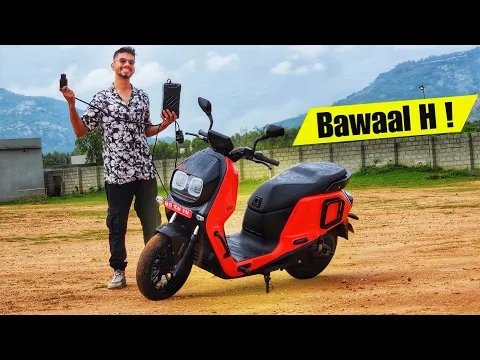
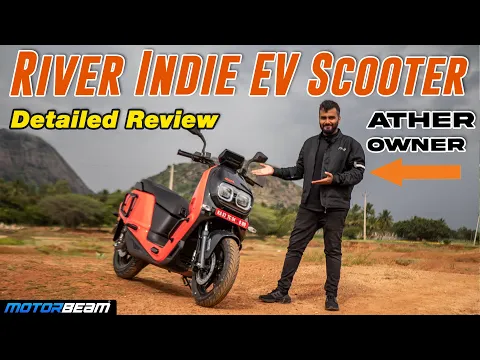
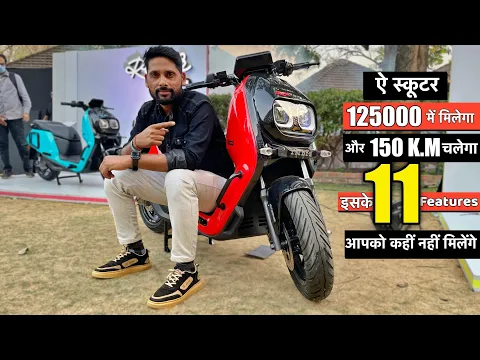
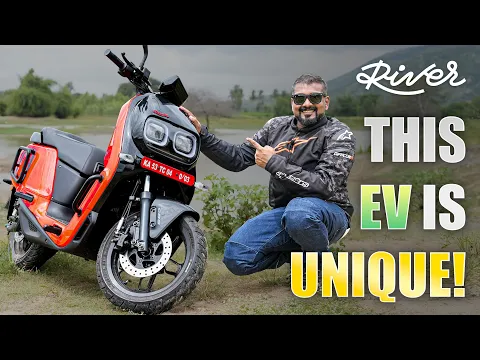
The River Indie looks unlike any other electric scooter on Indian roads. A bold, square-shaped LED headlamp sits inside a curvy front apron. The side panels flow into a boxy rear section with a rectangular tail lamp. This chunky, SUV-style look is on purpose. Every panel says tough, not delicate.
The design is full of practical touches. Crash guards sit built into the body panels. Pannier stays come fitted as standard, ready for mounting luggage. Front footrests let riders change position when the spacious floorboard is already loaded with cargo. Few electric scooters offer this much flexibility.
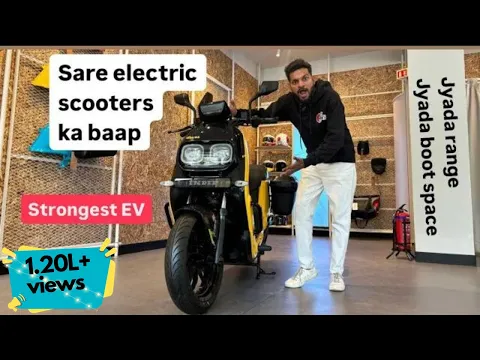
The underseat storage measures a genuinely huge 43 litres, among the largest offered on any electric scooter today, supplemented by a 12-litre front glovebox. This space easily fits a full-face helmet, a backpack, and the charger together. A digital instrument console handles the readouts, paired with Bluetooth connectivity. There is no touchscreen display, keeping things simple rather than tech-heavy.
Five colour options are available. These are Monsoon Blue, Spring Yellow, Storm Grey, Summer Red, and Winter White. Monsoon Blue remains the most popular choice among buyers so far. Build quality feels genuinely robust across every unit. That matters for the River Indie scooter, which is built for real-world daily use rather than weekend rides.
| Feature | Detail |
| Headlamp | Square LED |
| Storage | 43 litres underseat, 12 litres front |
| Colours | 5 |
| Console | Digital, Bluetooth |
| Frame | Steel tubular dual-cradle |
| Wheels | Alloy, 14-inch, tubeless |
Power on the River bike comes from a mid-mount electric motor. The rated output is 4.5 kW, with a peak of 6.7 kW available under hard acceleration. Peak torque comes in at 26 Nm, enough for confident overtakes in city traffic. The motor carries an IP67 rating, giving genuine protection against water and dust.
Three riding modes are on offer: Eco, Ride, and Rush. Eco mode stretches the claimed range toward its maximum figure. Rush mode unlocks the full 90 kmph top speed for highway stretches. These modes let riders balance range against speed based on the day's plans.
The River bike uses a chain-drive transmission to improve long-term durability in rugged conditions. It can climb an 18-degree slope, useful for steep driveways and ramps that trip up some rivals. It can wade through 300 mm of water, enough to cross flooded streets that would strand less rugged scooters. Owners on forums consistently praise how stable and jerk-free this River bike feels in stop-and-go traffic. Overtaking slower vehicles rarely feels like a struggle, even with a pillion on board.
| Specification | Value |
| Rated Power | 4.5 kW |
| Max Power | 6.7 kW |
| Max Torque | 26 Nm |
| Top Speed | 90 kmph |
| Riding Modes | Eco, Ride, Rush |
| Drive Type | Chain drive |
| Motor Rating | IP67 |
The handling on the River Indie electric scooter favours stability over sharp turns. A telescopic front fork with hydraulic dampers manages bumps up front. The rear uses twin gas-charged coil springs with hydraulic dampers and preload adjustment. Both ends work together to soak up rough Indian roads with real confidence.
Braking is equipped with disc brakes at both ends, backed by a combined braking system (CBS). This keeps stopping power steady across different road surfaces. The kerb weight sits at 143 kg, reasonably light considering the large storage capacity and rugged build. A ground clearance of 160 mm handles potholes and speed breakers without much drama.
The seat height is 787 mm, making the scooter accessible to a wide range of riders. The long, single-piece seat is genuinely comfortable, and pillion riders benefit from the added stability the wide floorboard provides. Suspension does feel firm over sharp bumps, especially at the front. Several reviewers have flagged this as an area for improvement.
It can handle heavy loads effortlessly, genuinely impressive for a scooter this size. This makes it a practical choice for riders who need to carry passengers and cargo together. Regenerative braking adds a small efficiency boost. It also eases the load on the mechanical brakes over time.
| Specification | Value |
| Front Suspension | Telescopic, hydraulic dampers |
| Rear Suspension | Twin gas-charged coil springs |
| Braking | CBS, disc front and rear |
| Kerb Weight | 143 kg |
| Seat Height | 787 mm |
| Ground Clearance | 177 mm (updated model) |
River claims a riding range of 161 km per charge for the Indie. Owner-reported figures land lower in real-world use, closer to 120 to 130 km depending on riding style and mode selection. This gap between claimed and real-world range is common across the electric scooter segment. It is not unique to this River electric scooter.
Charging takes around 5 hours for a full charge using the standard 750W charger. Fast charging support comes included at no additional cost. Some rivals charge extra for this feature, which makes it a genuine value-add here. The 4 kWh battery pack is fixed rather than swappable, so home or workplace charging access matters for daily use.
The running costs stay low, as expected for any River electric scooter. Electricity costs a fraction of what petrol would for the same distance. River backs the battery with a 3-year or 30,000 km warranty, and the motor carries a matching 3-year warranty. Buyers can also opt for an 8-year extended warranty for absolute peace of mind.
The service network is still a real limitation. River Mobility currently sells and services the Indie mainly through Bengaluru, Hyderabad, and a few other select locations, with a slowly expanding footprint elsewhere. Buyers outside these cities should confirm service access before committing to a purchase.
The River Indie price starts at Rs. 1,45,999 ex-showroom for the single Standard variant on offer. There are no additional trims to choose between. This simplifies the buying decision compared to scooters sold with multiple confusing variants.
| Variant | Approx. Ex-showroom Price |
| Indie Standard | Rs. 1,45,999 |
River Mobility has adjusted prices since the scooter's 2023 launch due to changes in the FAME/EMPS subsidy structures. On-road pricing will vary further by city once RTO and insurance are added, typically landing around Rs. 1,54,893 in Delhi. Buyers should always confirm current pricing directly with River Mobility, since offers and financing schemes do appear periodically.
The key rivals for this River bike include the Bajaj Chetak, TVS iQube, Ather Rizta, and Ola S1 Pro. Against this set, River Mobility leans on genuine utility and storage capacity rather than chasing premium tech features. For buyers who value cargo space and a rugged build over a flashy feature list, the Indie remains a distinctive choice. Its storage capacity alone sets it apart from nearly everything else in this price range.
The River Indie price starts at Rs. 1,45,999 ex-showroom for the Standard variant. On-road prices vary further by city once RTO and insurance charges are added, typically reaching around Rs. 1,54,893 in Delhi.
River claims an IDC range of 161 km per charge. Owner-reported figures average closer to 120 to 130 km in real-world riding conditions.
A full charge takes around 5 hours using the standard 750W charger. Fast charging support is also included.
River Mobility currently sells and services the Indie mainly in Bengaluru and Hyderabad, though its dealership and service network is expanding gradually to more cities across India.
It offers 43 litres of underseat storage, among the largest available on any electric scooter today, plus a 12-litre front glovebox. This easily fits a full-face helmet and a backpack together.
Buyers can consider the Bajaj Chetak or TVS iQube for wider service networks and premium build quality. The Ather Rizta is an excellent alternative for those who want a more tech-focused, family-oriented ride.