








 Riding Range
 Kerb WeightBraking System
 Max Power
 Max Torque
 Top Speed
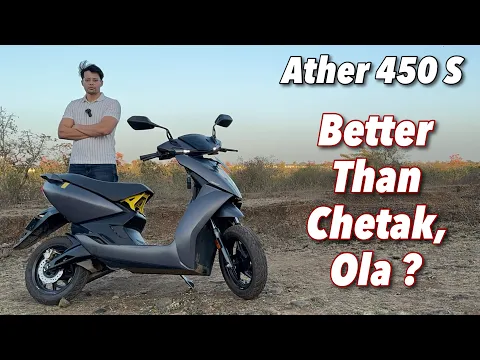
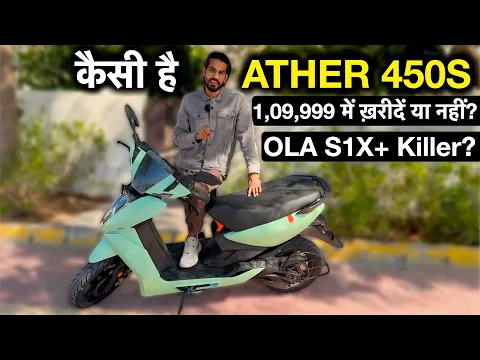
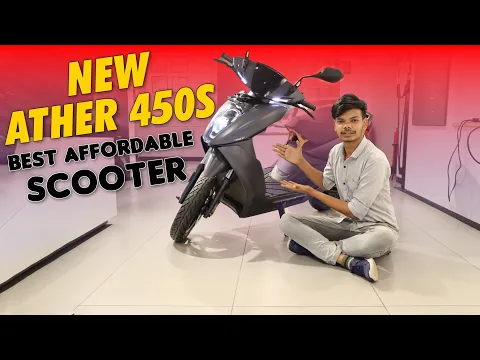
Design on the 450S sticks closely to the familiar Ather silhouette, since it shares its core body and chassis with the pricier 450X. A 7-inch DeepView digital display handles speed, range, and navigation, running on a Snapdragon 212 processor rather than the touchscreen unit reserved for the 450X and Apex.
Full LED lighting covers the headlight, tail light, and indicators, and the 22-litre underseat storage matches what buyers get across the rest of the 450 range, comfortably swallowing a full-face helmet along with a small bag. Alloy wheels come as standard, paired with disc brakes front and rear rather than the drum setups still common on cheaper electric scooters from other brands.
Four to five Ather 450S colours are typically available, including Still White, Space Grey, Cosmic Black, and Stealth Blue, giving buyers reasonable choice without the scooter feeling like a stripped-down base trim. Build quality feels consistent with Ather's reputation, with tight panel gaps and switchgear that doesn't feel noticeably cheaper than the pricier models in the lineup.
Buyers comparing pricing against the 450X will notice the styling differences are minor rather than dramatic, since Ather clearly designed this as an accessible entry point rather than a visually stripped-down version of its more expensive siblings. Even the seat upholstery and panel fit feel consistent across the range, so buyers stepping down from the 450X for budget reasons aren't left feeling like they've compromised on everyday build quality just to save money on their purchase, which matters for buyers who plan to keep the scooter for several years.
| Feature | Detail |
| Colours | 4-5 options (Still White, Space Grey, Cosmic Black, Stealth Blue) |
| Dashboard | 7-inch DeepView display, Snapdragon 212 |
| Bootspace | 22 litres |
| Lighting | Full LED (headlight, taillight, indicators) |
| Wheels | Alloy, front & rear disc brakes |
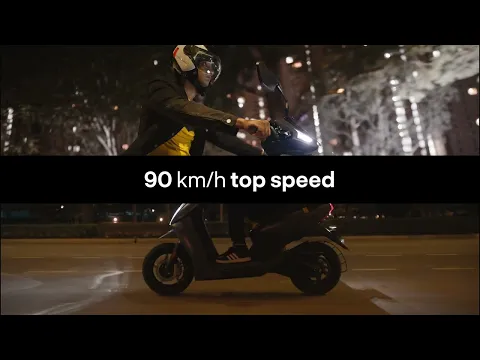
Under the floorboard, this scooter uses a 5.4 kW peak motor producing 22 Nm of torque, enough for a 0-40 km/h sprint in 3.9 seconds and a 90 km/h top speed, numbers that trail the 450X and Apex but remain competitive for a daily commuter scooter.
Two battery options are offered: a 2.9 kWh pack rated for 122 km IDC range, and a larger 3.5 kWh pack extending that to 161 km, letting buyers choose based on their typical daily distance rather than paying for range they won't use. Four riding modes, SmartEco, Eco, Ride, and Sport, cover most everyday situations, though the 450S skips the Warp mode and multi-mode traction control reserved for pricier siblings.
Braking uses a combined braking system with regenerative braking layered on top, a triple-piston front disc, and a single-piston rear disc, strong stopping hardware for this price bracket. Belt drive transmission keeps maintenance simple compared with chain-driven alternatives, and IP66-rated motor protection plus IPX7 water resistance mean monsoon riding isn't a major concern.
Gradeability sits at 18 degrees, slightly behind the steeper-rated 450X and Apex, though still comfortable for most Indian city terrain, including moderate flyovers and residential slopes riders encounter on a typical commute.
Coasting regeneration also recovers a small amount of charge whenever the throttle is released, a subtle efficiency gain that adds up meaningfully over a typical week of stop-start city riding through busy neighbourhoods and congested market roads. None of this feels like a compromise compared with the pricier models, since the underlying motor and braking hardware are shared across the range.
| Specification | Value |
| Peak Power | 5.4 kW |
| Max Torque | 22 Nm |
| Top Speed | 90 km/h |
| 0-40 km/h | 3.9 seconds |
| IDC Range | 122 km (2.9 kWh) / 161 km (3.5 kWh) |
| Riding Modes | SmartEco, Eco, Ride, Sport |
| Gradeability | 18 degrees |
Ride quality benefits from the same telescopic front forks and progressive rear monoshock used across the 450 range, tuned for a comfortable daily commute rather than aggressive cornering. Kerb weight comes in at 108 kg for the smaller-battery variant and 111.6 kg for the larger one, both light enough to manage easily in traffic and tight parking.
Ground clearance of 170mm and a 129.6cm wheelbase carry over unchanged from the rest of the lineup, meaning this scooter handles Indian speed breakers and uneven patches just as capably as its pricier siblings. Alloy wheels with tubeless tyres provide reasonable grip and stability at typical city speeds, even without the wider rear tyre fitted to the 450X and Apex.
AutoHold keeps the scooter stationary on inclines without constant brake pressure, a useful touch at signals on a slope, and Vehicle FallSafe adds a layer of protection most petrol scooters in this price range simply don't offer. Hill start assist and side-stand cutoff round out the safety basics buyers should expect at this price point.
Riders stepping up from a petrol scooter consistently mention how quiet and vibration-free the ride feels by comparison, even though outright performance sits a notch below the 450X. For most daily commuting needs within city limits, the 450S delivers a comparable experience to its pricier siblings at a meaningfully lower cost, particularly for shorter, stop-start city commutes rather than longer highway stretches most owners rarely attempt anyway on a scooter positioned for city use. Overall comfort on longer rides holds up reasonably well too, thanks to a wide, well-padded seat shared across the entire 450 lineup.
| Specification | Value |
| Kerb Weight | 108 kg (2.9 kWh) / 111.6 kg (3.5 kWh) |
| Ground Clearance | 170 mm |
| Wheelbase | 1,296 mm |
| Front Suspension | Telescopic forks |
| Rear Suspension | Progressive monoshock |
Running costs are the 450S's strongest argument, and its running cost figures reflect that value positioning clearly against petrol alternatives. Charging the smaller battery from empty to 80% takes roughly 5 hours 30 minutes at home, while the larger 3.5 kWh pack charges to 80% in about 3 hours 12 minutes thanks to its higher-rate charging support.
Electricity costs per kilometre run a fraction of petrol running costs, and Ather's standard warranty covers both battery and vehicle for 3 years or 30,000 km, whichever comes first, with the charger separately covered for 3 years. A Battery-as-a-Service plan is also offered on some variants, letting buyers pay a smaller upfront amount and a monthly fee for the battery instead, lowering the barrier to entry further.
Ather's growing network of Experience Centres and charging points across major and mid-sized Indian cities has reduced one of the bigger historical concerns around EV ownership, though buyers in smaller towns should still confirm local service and charging access before committing to a purchase.
Compared with petrol commuter scooters in a similar price bracket, the 450S offers meaningfully lower running costs over ownership, even though the upfront cost sits a bit higher than the cheapest petrol alternatives on the market today. Home charging remains the simplest routine for most owners, since a standard household socket is enough overnight.
Public fast-charging is reserved mainly for longer weekend trips rather than routine daily use around town or as a primary daily habit. Planning charging around a regular overnight routine tends to work out cheaper and more convenient than relying on public charging points for everyday commuting.
The Ather 450S variants are offered across multiple configurations built around two battery sizes and a couple of finish options, plus an optional Stack Pro software add-on. The base 2.9 kWh variant with 122 km IDC range starts at around ₹1.28 lakh ex-showroom, while the 3.5 kWh version with 161 km range is priced closer to ₹1.52 lakh.
On-road pricing typically adds roughly ₹7,000 to ₹10,000 over ex-showroom once RTO charges and insurance are included, varying by city and the exact variant chosen. Higher-spec AtherStack Pro variants, which unlock extended software features and a longer battery warranty, push pricing closer to ₹1.69 lakh for the range-topping configuration.
Within Ather's own lineup, the 450S sits below the 450X and well below the flagship Apex, trading away Warp mode, touchscreen display, and a few connected features in exchange for a noticeably lower starting price. Buyers who don't need the fastest acceleration or the most premium dashboard tech often find the 450S delivers most of the daily-use experience for meaningfully less money.
Against outside rivals like the TVS iQube, Bajaj Chetak, and Ather's own Rizta, the 450S remains competitive on range and charging speed while offering stronger braking hardware than several rivals in the same Ather 450 s price bracket. A test ride remains the simplest way to judge which battery size actually suits your daily commute before committing to either variant at your nearest Ather showroom and signing any paperwork. Comparing your typical weekly mileage against each battery's IDC rating is usually the quickest way to settle the decision.
| Variant | Ex-showroom Price |
| 450S (2.9 kWh, 122 km) | ₹1.28 Lakh |
| 450S (3.5 kWh, 161 km) | ₹1.52 Lakh |
| 450S Stack Pro (top variant) | ₹1.69 Lakh |
Ather 450s price starts at around ₹1.28 lakh ex-showroom for the base 2.9 kWh variant, rising to roughly ₹1.62 lakh for the longer-range 3.5 kWh version.
Ather 450S on-road price typically adds ₹7,000 to ₹10,000 over the ex-showroom figure once RTO charges and insurance are included, varying by city and variant.
The base variant offers a 122 km IDC range from its 2.9 kWh battery, while the larger 3.5 kWh pack extends this to 161 km on a full charge.
Yes, its combined braking system, warranty coverage, and reasonable range make it a solid first EV purchase, especially for buyers prioritising value over outright performance.
The 450S uses a less powerful motor, skips the touchscreen dashboard and Warp riding mode, and starts at a noticeably lower price than the 450X, its closest sibling in the lineup.