






 Displacement
 Mileage - ARAI
 Kerb Weight
 Fuel Tank CapacityBraking System


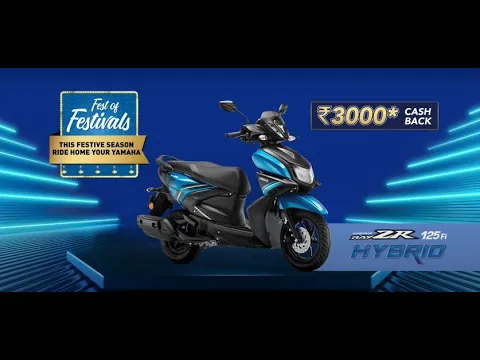
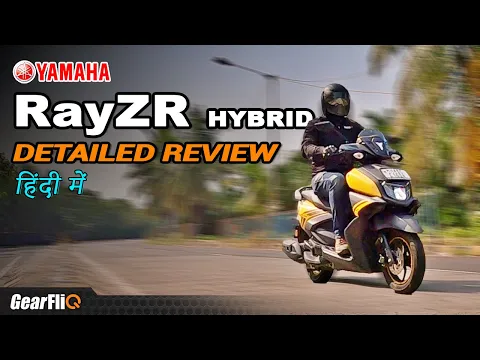
Launched in India in 2020, the Yamaha Ray ZR 125 is suited to college students, young professionals and daily commuters who want a lightweight scooter with sporty styling. Its automatic transmission makes it easy to ride in city traffic, while the hybrid assist system helps when pulling away from a stop.
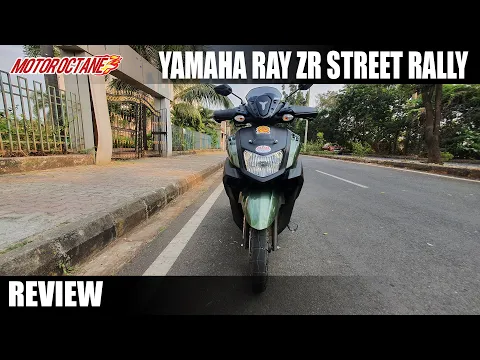
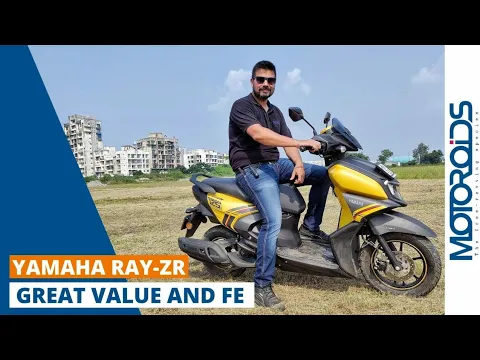
The Yamaha Ray ZR 125 has sharper styling than a conventional family scooter. Its angular body panels and sporty front apron give it a fresh look. The Street Rally versions add knuckle guards, block-pattern tyres and extra bodywork. However, the floorboard is less spacious than that of some family scooters.
The 125cc engine produces 8.2 PS and 10.3 Nm, making it suitable for everyday commuting. A Smart Motor Generator provides extra assistance when pulling away, while the low 99kg kerb weight makes the scooter easier to handle in traffic and tight parking spaces.
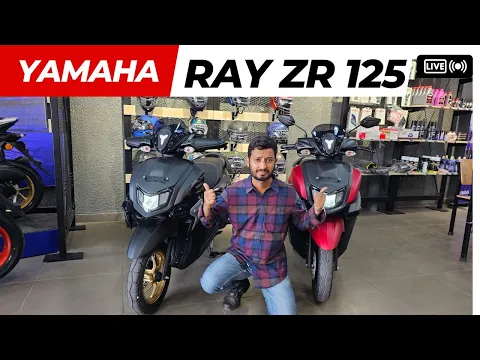
The Ray ZR 125 Fi Hybrid comes in four variants: Fi Hybrid Drum, Fi Hybrid Disc, Street Rally LCD and Street Rally TFT. All use the same engine and transmission, with differences in braking, styling and features. Higher variants add Bluetooth connectivity, while the top-spec TFT gets turn-by-turn navigation.
The Yamaha Ray ZR 125 price in India starts at ₹80,680 ex-showroom for the Fi Hybrid Drum variant. The range goes up to ₹1,01,240 for the Street Rally TFT, which adds a colour display and navigation. The price difference is mainly down to the brakes, instrument console, connectivity and styling rather than any change in engine performance.
| Variant | Engine / Power / Torque / Transmission | Claimed Mileage | Ex-showroom Price |
| Fi Hybrid Drum | 125cc petrol, 8.2 PS, 10.3 Nm, automatic CVT | 71.33 kmpl | ₹80,680 |
| Fi Hybrid Disc | 125cc petrol, 8.2 PS, 10.3 Nm, automatic CVT | 71.33 kmpl | ₹88,480 |
| Street Rally LCD | 125cc petrol, 8.2 PS, 10.3 Nm, automatic CVT | 71.33 kmpl | ₹94,730 |
| Street Rally TFT | 125cc petrol, 8.2 PS, 10.3 Nm, automatic CVT | 71.33 kmpl | ₹1,01,240 |
The Yamaha Ray ZR 125 on-road price will be higher than the ex-showroom figure once registration, insurance and other applicable charges are added.
All four variants share the same engine and CVT, with differences in braking, displays and styling. The Fi Hybrid Disc costs ₹7,800 more than the Drum but adds a front disc brake, digital console and Bluetooth. The Street Rally versions bring knuckle guards and rugged styling, while the top TFT variant adds a colour display and turn-by-turn navigation. Choose based on which features you’ll actually use.
The Yamaha Ray ZR 125 Fi Hybrid uses a 125cc, air-cooled, single-cylinder petrol engine with fuel injection. It produces 8.2 PS at 6,500 rpm and 10.3 Nm of torque at 5,000 rpm. An automatic CVT transmission sends power to the rear wheel, so the rider does not need to operate a manual gearbox.
| Engine Specification | Details |
| Engine capacity | 125cc |
| Engine type | Single-cylinder, four-stroke, air-cooled, SOHC, two-valve |
| Fuel system | Fuel injection |
| Maximum power | 8.2 PS at 6,500 rpm |
| Maximum torque | 10.3 Nm at 5,000 rpm |
| Transmission | V-belt automatic CVT |
| Clutch | Centrifugal clutch |
| Hybrid system | Smart Motor Generator (SMG) |
| Fuel type | Petrol, E20-compatible |
The 125cc engine produces 8.2 PS and 10.3 Nm, which is enough for everyday city riding. The automatic CVT handles gear changes, while the Smart Motor Generator (SMG) gives the scooter a little extra assistance when pulling away from traffic lights or climbing an incline. It is a mild-hybrid system, not an electric drive.
The Stop & Start System switches the engine off during suitable stops and restarts it when you open the throttle. This can save fuel in stop-start traffic, though actual mileage depends on your riding style and road conditions.
The table below covers the Ray ZR 125's fuel economy, dimensions and performance figures, along with estimates of what you may see in everyday use.
| Specification | Details |
| Claimed mileage | 71.33 kmpl |
| City mileage (estimated) | Around 50-55 kmpl |
| Highway mileage (estimated) | Around 58-62 kmpl |
| Fuel tank capacity | 5.2 litres |
| Seat height | 785mm |
| Ground clearance | 145mm |
| Kerb weight | 99kg |
| Storage | 21 litres |
| Top speed | Around 90-95 kmph |
The Ray ZR’s 99kg kerb weight makes it easy to handle in the city. It is easier to move out of a parking slot or manoeuvre at low speeds than a heavier scooter, which can help newer riders build confidence. The 785mm seat height will suit many riders, though getting both feet flat on the ground depends on your height and inseam. You also get a 21-litre underseat storage that can hold half-face helmets and other essentials.
Ground clearance is 145mm, so take tall speed breakers slowly with a pillion or heavy load, as the underbody may scrape. The 5.2-litre fuel tank is modest, but good mileage should help keep fuel stops manageable. Its estimated top speed of 90-95 kmph is enough for short highway stretches, though the Ray ZR is better suited to city riding than sustained high-speed travel.
The Ray ZR 125 keeps things simple to ride, with a few useful features depending on the variant.
Technology and connectivity
Navigation and answer-back: The Street Rally TFT gets turn-by-turn navigation, while Street Rally versions have an answer-back function to help locate the scooter.
Comfort and convenience
The Ray ZR has a stepped seat, automatic transmission and 21-litre under-seat storage. Its low weight makes parking easier, but the compact floorboard leaves less room for your feet and bags. Ground clearance is 145mm, so take tall speed breakers slowly, particularly with a passenger.
The Ray ZR 125 gets a Unified Braking System (UBS), but it does not get ABS, helping keep costs down.
There are 4 Yamaha Ray ZR 125 variants on sale in India. All use the same 125cc engine and CVT transmission, so the extra cost goes towards braking hardware, the instrument console, connectivity and styling.
| Variant | Fuel and Transmission | Braking Setup | Technology and Styling |
| Fi Hybrid Drum | Petrol, automatic CVT | Front and rear drum brakes | Analogue console, alloy wheels |
| Fi Hybrid Disc | Petrol, automatic CVT | Front disc, rear drum | Digital LCD console, Bluetooth connectivity |
| Street Rally LCD | Petrol, automatic CVT | Front disc, rear drum | Digital LCD, knuckle guards, block-pattern tyres |
| Street Rally TFT | Petrol, automatic CVT | Front disc, rear drum | Colour TFT display, turn-by-turn navigation, Street Rally styling |
Yamaha Ray ZR 125 Variants: Which One Offers the Best Value?
The right Ray ZR 125 variant depends on your budget and the features you need.
Street Rally TFT: At ₹1,01,240, it adds a colour TFT display and turn-by-turn navigation.
All variants use the same 125cc engine and automatic transmission. The Fi Hybrid Disc offers a useful addition of braking and technology, while the Street Rally versions suit buyers who want the rugged styling or extra display features.
The Yamaha Ray ZR mileage is claimed at 71.33 kmpl under test conditions. That is a laboratory figure, not a promise of what you will get on every ride. For everyday use, the supplied estimates suggest around 50-55 kmpl in the city and 58-62 kmpl on the highway.
| Powertrain | Claimed Mileage | Estimated City Mileage | Estimated Highway Mileage |
| 125cc petrol engine with SMG hybrid assist | 71.33 kmpl | Around 50-55 kmpl | Around 58-62 kmpl |
City mileage drops in heavy traffic, though the Stop & Start System helps save fuel at traffic lights. Hard acceleration, frequent braking and carrying a passenger can also affect mileage. On open roads, steady speeds use less fuel than riding near the scooter’s top speed. The 5.2-litre tank is small, so fuel stops will depend on your actual mileage.
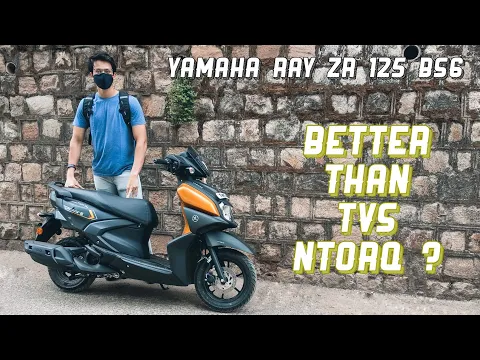
The Yamaha Ray ZR 125 competes with scooters such as the TVS Ntorq 125, Suzuki Burgman Street 125 and Honda Activa 125. The Ntorq is all in for performance and features, the Burgman offers a larger maxi-scooter-style design, and the Activa is a practical alternative for everyday family use. Prices below are indicative ex-showroom ranges and may vary by variant and location.
| Model | Engine | Power | Approx. Ex-showroom Price | Key USP |
| Yamaha Ray ZR 125 Fi Hybrid | 125cc | 8.2 PS | ₹80,680-₹1,01,240 | Low weight, hybrid assist and high claimed mileage |
| TVS Ntorq 125 | 124.8cc | 9.5 PS | ₹89,640-₹1.06 lakh | Sporty performance and connected features |
| Suzuki Burgman Street 125 | 124cc | 8.7 PS | ₹94,300-₹1.14 lakh | Maxi-scooter styling and more room to stretch your feet |
| Honda Activa 125 | 123.92cc | 8.4 PS | ₹80,250-₹89,450 | Familiar family-scooter layout and practical everyday use |
Here’s how it stacks up against the established rivals.
Yamaha Ray ZR 125 vs TVS Ntorq 125
The Yamaha Ray ZR 125 is lighter and better suited to riders who want a scooter for daily commuting with a focus on fuel economy. Its compact body also makes it easier to handle in heavy traffic.
The TVS Ntorq 125 has a more powerful engine and a sportier feel, making it a better fit if you enjoy quicker acceleration and want a scooter with a stronger performance focus.
Yamaha Ray ZR 125 vs Suzuki Burgman Street 125
The Ray ZR 125 is compact and easy to move around in traffic or tight parking spaces. Its light weight is useful if you often ride through crowded streets or have limited parking space at home.
The Suzuki Burgman Street 125 has a larger body, maxi-scooter styling and more room to stretch your feet. Its layout may feel more comfortable on longer rides if you prefer having extra space to change your foot position.
Yamaha Ray ZR 125 vs Honda Activa 125
The Ray ZR 125 has sharper styling and a low 99kg kerb weight, which helps when manoeuvring at slow speeds. Its hybrid assist system also gives a little extra help when pulling away from a stop.
The Honda Activa 125 takes a more conventional approach and suits everyday commuting and family use. It is worth considering if you prefer a familiar design over the Ray ZR's sportier looks.
Which Scooter Should You Choose?
The Ray ZR 125 is a light scooter that keeps fuel use in check. The trade-off is less space for your feet and limited power when you leave the city.
| Pros | Cons |
| At 99kg, it's easy to pull out of a parking spot and handle at low speeds. | The floorboard is quite small, so carrying shopping bags between your feet can be awkward. |
| The claimed mileage of 71.33 kmpl makes it an economical option for daily travel. | The 5.2-litre tank means you'll need to stop for fuel more often on longer trips. |
| Hybrid assist helps when moving off, and Stop & Start can save fuel at traffic lights. | With 8.2 PS, it has enough power for city use but isn't built for quick highway runs. |
| The Disc variant gets a front disc brake, digital console and Bluetooth connectivity. | The base Drum has drum brakes on both wheels and misses out on Bluetooth. |
| The Street Rally TFT gets a colour display and turn-by-turn navigation. | The top variant costs over ₹1 lakh ex-showroom, which is a lot if you only need basic transport. |
The Ray ZR 125 makes most sense as a city scooter. It's light, frugal and simple to ride, but the small floorboard and modest engine are worth keeping in mind.
If you spend most of your time riding to work, college or nearby shops, the Ray ZR 125 is easy to live with. Its 99kg weight helps when parking in a tight spot, and the automatic transmission takes one more thing off your mind in traffic. The hybrid assist helps when pulling away, while the Stop & Start System can reduce fuel use at signals.
I'd look at the Fi Hybrid Disc first. At ₹88,480, it adds a front disc brake, digital console and Bluetooth over the Drum variant. The Drum is enough if you want to spend less. The Street Rally TFT costs more, so it makes sense mainly if you want its colour screen and will use the navigation.
Think about what your daily rides involve before choosing. The TVS Ntorq 125 has more performance on offer, while the Suzuki Burgman Street 125 gives you more room to move your feet. The Ray ZR's floorboard can feel cramped with bulky bags, and its 145mm ground clearance needs care over tall speed breakers, particularly with a passenger.
For short city trips and low running costs, the Ray ZR 125 is a sensible option. If you regularly carry a lot of luggage or spend long stretches on the highway, its size and performance may become frustrating.
Prices start at ₹80,680 for the Fi Hybrid Drum and go up to ₹1,01,240 for the Street Rally TFT, ex-showroom. Your final price will vary by city.
Yamaha's claimed figure is 71.33 kmpl. For daily use, around 50-55 kmpl in the city and 58-62 kmpl on the highway is a more realistic estimate, though traffic and riding style make a difference.
The Ray ZR 125 can reach an estimated 90-95 kmph. It's comfortable enough for city commutes and the odd highway stretch, but isn't meant for holding high speeds for long.
It has a 125cc, air-cooled petrol engine that produces 8.2 PS and 10.3 Nm. Power goes to the rear wheel through an automatic CVT.
No. Its Smart Motor Generator provides brief assistance when you pull away, but the scooter cannot run on battery power alone.
Only the Fi Hybrid Disc and Street Rally variants get a 190mm front disc with a rear drum. The Fi Hybrid Drum has drum brakes on both wheels.
The Fi Hybrid Disc is a good choice if you want a front disc brake, digital console and Bluetooth connectivity. The Drum costs less, while the Street Rally TFT adds a colour display and navigation.
Yes. Its 99kg kerb weight and automatic transmission make city riding easier. The floorboard is compact, though, and the 145mm ground clearance means you should take tall speed breakers slowly, particularly with a pillion.