Displacement
 Kerb Weight
 Fuel Tank CapacityBraking System

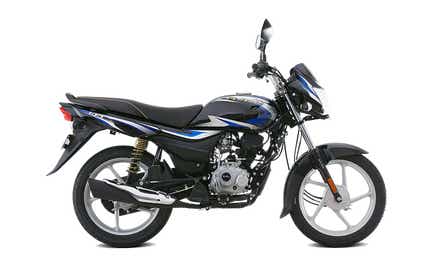
The Bajaj Platina 100, also known as the Platina bike, keeps its design simple, with a conventional commuter-bike shape, a long seat, alloy wheels and an LED daytime running light above the headlamp. Its graphics add some style, but the focus remains on everyday use over sporty looks.
First introduced in 2006, the Platina has become a familiar choice for regular commuting. The 99.59cc engine produces modest power, making it better suited to city speeds than quick acceleration or sustained high-speed riding. Its 11-litre fuel tank also means fewer fuel stops during the week.
Comfort is a key part of the Platina 100’s name. Bajaj’s ComforTec setup includes front telescopic forks with 135mm of travel and rear Spring-in-Spring (SNS) shock absorbers, designed to handle potholes and rough patches. The long seat gives both rider and pillion room to sit comfortably.
The current model has a straightforward equipment list, including an analogue instrument console, drum brakes, electric and kick start, and a four-speed gearbox. Bajaj claims a mileage of 70 kmpl, making it worth considering for riders who want to keep fuel costs down. However, buyers looking for a digital display, front disc brake or factory-fitted tubeless tyres will need to look at other options.
The Bajaj Platina 100 price starts at around ₹70,511 ex-showroom. The final amount depends on your city, insurance, registration charges and dealer fees. Since the range has one main trim, the decision is simpler.
| Model | Engine | Claimed mileage | Ex-showroom price |
| Bajaj Platina 100 ES Drum | 99.59cc petrol, 8.2 PS, 8.3 Nm, 4-speed MT | 70 kmpl | ₹70,511 |
The price above is an indicative reference based on Delhi ex-showroom values, not a confirmed current dealer quote. Check with a Bajaj showroom for the latest price in your city. Do note that the Bajaj Platina on-road price will include registration, insurance and other applicable charges.
The Platina 100 keeps costs down with one main variant, offering a 99.59cc engine, electric and kick start, alloy wheels and an analogue console. You get drum brakes, tube-type tyres and basic equipment, with no front disc brake or digital display.
The Bajaj Platina 100 uses a 99.59cc, single-cylinder, air-cooled DTS-i engine with electronic fuel injection. It produces 7.9 PS at 7,500 rpm and 8.3 Nm of torque at 5,500 rpm. A four-speed manual gearbox sends power to the rear wheel.
| Engine specification | Details |
| Engine capacity | 99.59cc |
| Engine type | Single-cylinder, four-stroke, air-cooled DTS-i |
| Fuel system | Electronic fuel injection (e-FI) |
| Maximum power | 7.9 PS at 7,500 rpm |
| Maximum torque | 8.3 Nm at 5,500 rpm |
| Gearbox | 4-speed manual |
| Clutch | Wet, multi-plate |
| Fuel type | Petrol, E20-compatible |
The Platina 100 is built for everyday commuting, not quick acceleration or high-speed riding. Its 8.3 Nm of torque is enough for routine city travel, though you may need to downshift when climbing flyovers or overtaking. The four-speed gearbox keeps things simple, while electronic fuel injection helps manage fuel delivery.
The table below covers the figures most likely to affect everyday use, from fuel economy to seat height and weight.
| Specification | Details |
| Claimed mileage | 70 kmpl |
| Estimated city mileage | 60-65 kmpl |
| Estimated highway mileage | 68-72 kmpl |
| Fuel tank capacity | 11 litres |
| Seat height | 807mm |
| Ground clearance | 200mm |
| Kerb weight | 117kg |
| Top speed | Around 90 kmph |
The 807mm seat height is worth checking in person, as your ability to put both feet down will depend on your height and inseam. The 200mm ground clearance helps when crossing speed breakers and uneven roads, although you should still slow down for large bumps.
At 117kg, the Platina 100 is relatively light for a motorcycle, which can help when pushing it into a parking spot or moving it around at low speeds. The 11-litre tank is also useful for commuters who cover long distances every day.
The Platina 100 does not have a long list of electronic features. Most of its equipment is aimed at making regular commuting easier.
Technology and connectivity
USB charging port: You get a USB port near the handlebar for charging a compatible phone or device.
Comfort and convenience
The equipment is basic, but much of it has a clear purpose. The suspension and seat matter more to everyday comfort than a large display would on a motorcycle built mainly for commuting.
The Platina 100 uses drum brakes at both ends and a Combined Braking System (CBS). It does not offer ABS or a front disc brake.
LED daytime running light: The DRL improves daytime visibility, but it does not replace the main headlamp when riding in low light.
For everyday commuting, the CBS and drum brakes provide the basic equipment. Riders who regularly travel at higher speeds or want the added support of ABS should compare motorcycles with a more advanced braking setup.
There’s just Bajaj Platina 100 variant available, so there are no engine or braking upgrades to choose between. Colour and graphic options may vary by availability, but the core mechanical package remains the same.
| Variant | Fuel and gearbox | Safety equipment | Technology and comfort |
| Platina 100 ES Drum | Petrol, 4-speed manual | Front and rear drum brakes with anti-skid braking system | Analogue console, LED DRL, electric and kick start, ComforTec suspension |
Since there is only one main trim, you do not need to spend more to get a stronger engine or a better-equipped version of the Platina 100. The decision comes down to whether its standard equipment meets your needs.
It gets electric start, alloy wheels, drum brakes, CBS and an analogue console. It suits buyers who want a straightforward commuter and do not need a digital display or front disc brake.
The Bajaj Platina mileage figures sit at 70 kmpl for the 100cc model. In everyday use, the figure will vary with traffic, speed, load, maintenance and riding style. The estimates below offer a broad guide rather than a guaranteed result.
| Powertrain | Claimed Mileage | Real-World City Mileage | Real-World Highway Mileage |
| 99.59cc single-cylinder petrol engine | 70 kmpl | Around 60-65 kmpl | Around 68-72 kmpl |
City mileage can drop in heavy traffic, where frequent braking, acceleration and gear changes use more fuel. Carrying a pillion or spending long periods at traffic lights can also affect the average. Riding at a steady pace, avoiding sudden acceleration and keeping the tyres at the correct pressure can help you get better mileage. Regular servicing and a properly lubricated chain also help keep the bike running smoothly.
The Platina 100 has an 11-litre fuel tank, which means fewer petrol stops during the week. If you get an average of 60 kmpl, you could cover around 660 km on a full tank. Your actual range will depend on traffic, riding speed and how much fuel you use in daily conditions.
The Platina 100 goes up against bikes such as the Hero Splendor Plus, Honda Shine 100, Hero HF Deluxe and TVS Sport. All four are built for everyday commuting, but they differ in engine size, price and features.
| Model | Engine | Power | Indicative ex-showroom price | Key difference |
| Bajaj Platina 100 | 99.59cc | 7.9 PS | Around ₹70,511 | Long seat and comfort-focused suspension |
| Hero Splendor Plus | 97.2cc | 8.02 PS | Around ₹77,777 | Established commuter with a strong resale reputation |
| Honda Shine 100 | 98.98cc | 7.38 PS | Around ₹65,642 | Simple, no-frills commuter |
| Hero HF Deluxe | 97.2cc | 8.02 PS | Around ₹59,477 | Lower starting price |
| TVS Sport | 109.7cc | 8.29 PS | Around ₹59,100 | Slightly larger engine |
Prices are indicative and may vary by city, variant and model year. Check the latest dealer prices before comparing the final on-road cost.
The Platina 100 faces competition from other commuter bikes in a similar price range. The differences become clearer when you compare their engines, comfort and everyday running costs.
Bajaj Platina 100 vs Hero Splendor Plus
The Hero Splendor Plus is a familiar choice for daily travel, with simple mechanicals, easy maintenance and a wide service network. It also has a strong reputation in the used-bike market.
The Platina 100 gets a long seat and ComforTec suspension. These may be useful if your commute involves potholes and broken roads, so try both bikes if ride comfort matters to you.
Bajaj Platina 100 vs Honda Shine 100
The Honda Shine 100 keeps things straightforward, with a small engine and the basic equipment needed for everyday trips to work or the market. It suits riders who do not need many extra features.
The Platina 100 has a long seat and suspension designed for uneven roads. Compare the prices at your local dealerships and see which bike feels better during a test ride.
Bajaj Platina 100 vs Hero HF Deluxe
The Hero HF Deluxe is worth a look if you want to spend less when buying a commuter bike. It offers a simple setup for daily travel without adding much to the cost.
The Platina 100 has an 11-litre fuel tank and 135mm of front suspension travel. These details may matter if you ride long distances or deal with rough roads regularly.
Bajaj Platina 100 vs TVS Sport
The TVS Sport uses a 109.7cc engine, compared with the Platina 100's 99.59cc unit. It is another option for riders who need a basic petrol commuter for daily use.
The Platina 100 has a long seat and ComforTec suspension. If you spend a lot of time riding, compare the seating position and how each bike handles potholes before making a decision.
Which Bike Should You Choose?
The Platina 100 covers the basics well, but there are a few things to consider before buying it.
| Pros | Cons |
| Bajaj claims 70 kmpl, which can help reduce fuel bills if you ride daily. | Both wheels get drum brakes, with no front disc brake or ABS. |
| The long seat gives the rider and pillion plenty of room on everyday trips. | The tube-type tyres can make punctures more of a hassle to fix. |
| The front suspension has 135mm of travel, which helps when riding over potholes and uneven roads. | The 99.59cc engine has limited power for quick overtakes and long stretches at high speeds. |
| The 11-litre fuel tank means you will not need to stop for petrol as often on longer rides. | The analogue console is basic and does not offer a digital display or smartphone connectivity. |
| Electric and kick start, alloy wheels and an LED daytime running light are included. | There is little choice if you want a version with more equipment or upgraded features. |
The biggest reasons to consider the Platina 100 are its fuel economy, suspension and practical seat. The compromises are equally clear: the brakes and console are basic, the tyres are tube-type, and the engine is meant for commuting rather than fast highway riding.
The Bajaj Platina 100 is a clear buy if you use your motorcycle every day and want to keep fuel costs under control. It is suited to office commutes, regular errands and longer daily runs at ordinary speeds. The long seat and suspension setup are useful if your route includes broken patches, potholes and uneven roads.
Its claimed 70 kmpl mileage is attractive and the 11-litre tank helps reduce fuel stops, while the relatively low kerb weight makes the bike easier to move around when parking. If you often ride with a pillion, check that both of you find the seat comfortable.
There are some compromises to keep in mind. The 99.59cc engine has modest power, so frequent high-speed travel and quick overtakes are not its strong points. The bike also lacks a front disc brake and ABS in the listed setup, and its tube-type tyres may be less convenient if you get a puncture. If these features matter to you, compare the Platina with other commuter bikes in your budget.
Before you buy, check the latest Bajaj Platina bike price and ask for the full Platina bike price on road in your city. Confirm the tyre type, braking equipment and USB charging port fitment on the exact model being offered. A short test ride will help you judge the seat height, clutch, gear changes and suspension on the roads you use most.
The Platina 100 has an 11-litre fuel tank, which can easily help it cover more than 500 kms under mixed usage before needing a refill.
Bajaj Platina's top speed is around 90 kmph. The actual speed depends on road conditions, rider weight and the bike's condition. It is best suited to everyday commuting over sustained high-speed riding.
The Bajaj Platina 100 comes with tube-type tyres and drum brakes at both ends. It does not have a front disc brake or ABS. Check the exact specifications with the dealer before buying.
The listed Bajaj Platina 100 ex-showroom price is around ₹70,511. The Bajaj Platina 100 on-road price will be higher after adding registration, insurance and other charges. The final amount depends on your city.
Yes, it is suited to everyday travel, with a long seat, comfort-focused suspension and low running costs. Its modest power and basic braking equipment may not suit riders who regularly travel at high speeds or want features such as ABS.
Bajaj claims a mileage of 70 kmpl. In everyday use, you can expect around 60-65 kmpl in the city and 68-72 kmpl on the highway, depending on traffic, riding speed, load and maintenance.
The Platina 100 has a 99.59cc, single-cylinder, air-cooled DTS-i engine with fuel injection. It produces 8.2 PS and 8.3 Nm of torque and comes with a four-speed manual gearbox.